
On Psychotherapy
Reflections from your early career clinician.

“I am not in psychoanalysis merely as a business or intellectual exercise. It is a life and death matter.”
Michael Eigen1
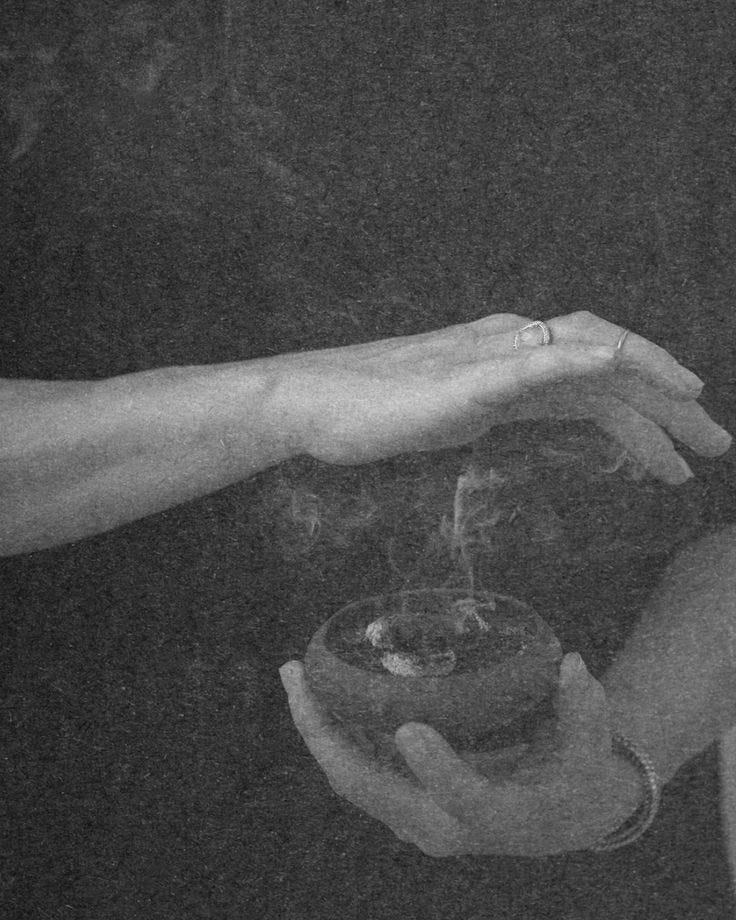
My first year in private practice has changed me. There is an intensity emerging to my work, and I hardly know what to make of it. For my entire training experience, I was told what a “safe” and “gentle” presence I have. I think I’ve spent years masking the underlying fervency with which I hold the therapeutic work under the guise of wanting my patients to have a soft landing. And wanting to be liked. After all, therapists (and many others who find themselves in the healing professions) have a tendency to recreate our original wounds and conflicts within our work.
My approach to therapy has simplified and refined. It feels less clear, but more real, more meaningful, more beautiful. With a greater awareness of and mindfulness toward the need to be liked by my patients, to keep everyone happy and safe and coming back, to provide some type of outcome that really isn’t within my control anyway, I find I can begin to release myself from these expectations and simply be as a therapist.
What I offer in my clinical work is rather straightforward: a relationship wherein my patients are free to explore their inner worlds, so they may come to know themselves more deeply, loosening the grip of past traumas and disavowed parts of Self to create lives of greater authenticity, freedom, and meaning.
The purpose of the therapeutic endeavor should always be shared, collaboratively co-created. Often when patients meet with me for an initial phone consultation, they describe previous therapy experiences that haven’t felt particularly impactful. I’m always a bit curious about this, and we might wonder out loud together: What would make our experience meaningful? How might meaning be created between the two of us? What type of impact are you hoping this experience will have on your personhood, on your life? What usually comes from these inquiries is that my patients haven’t felt the intensity of what it’s like to be in pursuit of a shared purpose while also truly engaged and connected to a genuine therapist who is deeply committed to that purpose.
My work is centered around shared experience, mutual recognition, intersubjectivity2, all fancy ways of saying that I seek to enter into authentic relationships with each of my patients. I am infinitely eager to know them, to come to understand their minds. I bring lots of questions, and when I run out of questions, I take note of this and start to wonder with my patients about what might be happening within our work that is shutting down my/our sense of curiosity.
The purpose of our work is something we come to formulate together, and I draw solace and inspiration from this episode on beginning therapy with Jonathan Shedler, PhD and David Puder, MD:
I encourage my patients to speak as freely and openly as possible, as this allows me to begin to piece together a coherent picture of what might be happening psychologically that is leaving them dissatisfied in their relationships, vulnerable to depression, uncertain about how to move forward in life, or any other number of presenting concerns.
What we do in therapy, how we come to achieve this shared purpose is still something of a mystery to me. In short, we talk about it. By putting words to our pain, our hopes, our dreams, our desires, our secrets, our shame, our emotions, our somatic sensations, we begin to create ourselves. Why does knowing oneself have the effect of reducing one’s sense of suffering? Perhaps it is because to know oneself reduces the sense of self-alienation, replacing it with self-understanding, self-compassion, even self-love3.
“Therapy may involve skill, but is also a form of prayer.”
Michael Eigen
I rely on the art of therapy more than the technicalities of therapeutic skill. When my patients realize I’m not going to throw worksheets at them, or teach them coping skills, or tell them what to do, or even offer them some sage wisdom, the disappointment becomes palpable. It’s in these moments that faith in the therapeutic process is vital. It’s normal to feel quite lost in therapy. I don’t know how long this will take, or where this will lead us. But I do promise to be present as we struggle through the uncertainty together.
I’m one year into private practice, and I can’t help but wonder if modern social media trends will be the death of this sacred and holy work. Manualized treatments promising results in 8 sessions or less, multi-thousand dollar 6-week coaching programs marketed as “not just talk therapy,” wellness influencers building empires off of having found all of the answers and guaranteeing “real results,” I find myself grieved at the way the mystery of the human condition can be so easily reduced to a formula. As one who has personally experienced the harmful repercussions of religious, cult-like mentality, I balk at any adoring group centered around a person who claims to have a handle on life, on healing. Behind the brand is often another very ordinary human being grasping onto a sense of security that certainty allows.
But in a world obsessed with quick fixes, answers, results, and certainty, why would anyone commit to a lengthy and intensive process that offers none of these outcomes? Moreover, why would anyone choose to forgo their insurance and pay out of pocket to work with me? It both frustrates and relieves me that I don’t have answers even for these questions. I pause and remember, I am not here to soothe patients’ uncertainties through having the answers. I am very interested in helping my patients come to as close an understanding they can get of their own answers.
The patients who are drawn to working with me and who commit to doing this work together often form an ability for trust and resignation. Through our work, they are able to release the fantasy of omniscient omnipotence and have faith that the process will unfold however it is meant to. They come to know they can bring their disappointments and frustrations about the work to me, and together we can mourn the experiences they long for but will never have. We can ask questions and live our way into the answers, knowing that for as long as we live, we will still be searching for that which can never fully be answered.
Through therapy we are given the opportunity to create not a dream life, but a real life. A lived life full of meaning and doubts, beauty and suffering. It is my deep privilege and honor to facilitate this sacred work.
Eternally grateful to find myself mirrored in these words by Michael Eigen in his book, The Psychoanalytic Mystic.
For a more thorough read on these psychoanalytic concepts, I recommend The Bonds of Love, by Jessica Benjamin.
Alienation as a form of suffering, and the role of love in it’s resolution comes from the brilliant synthesis of existentialism and psychoanalysis by M. Guy Thompson in the book, Existential Psychoanalysis: A Contemporary Introduction.